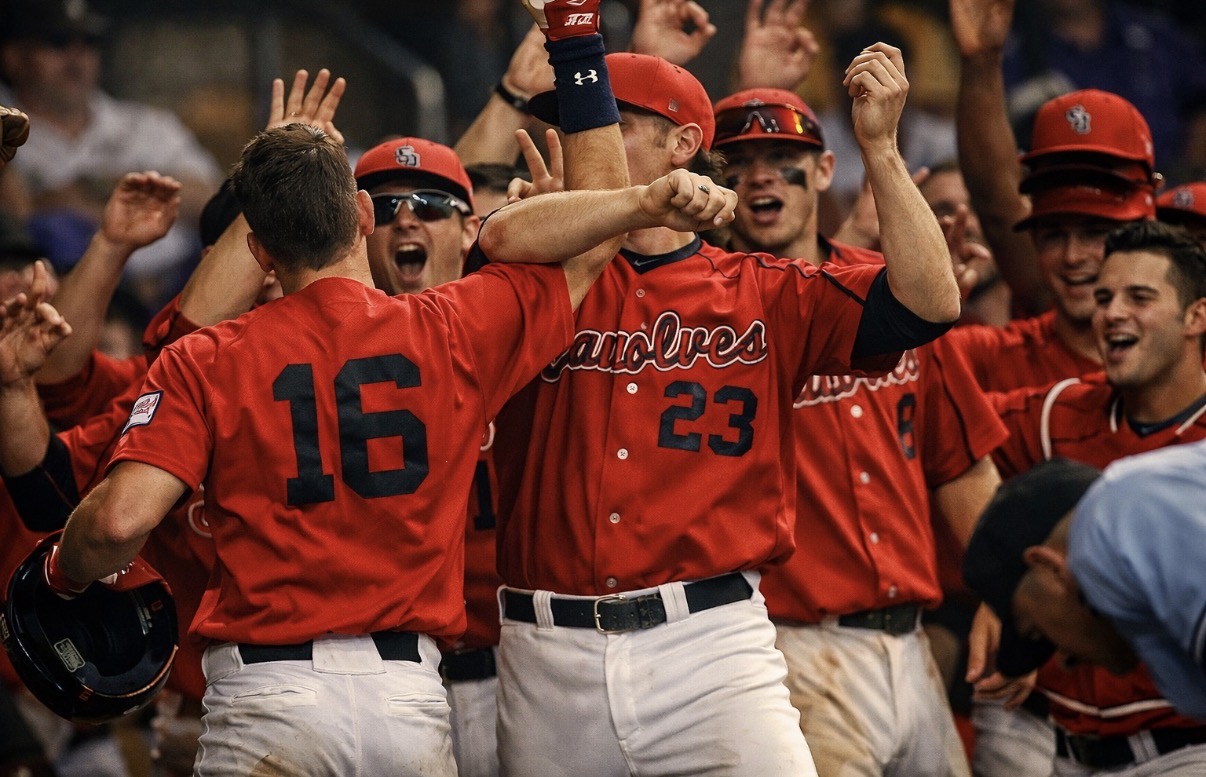
- CAGE WORKHot-zone hunting off the machine
- GAME RESULT3-1 count, lays off the pitch outside her zone
- Player outcomeUNLOADS ON THE PITCH SHE WAS HUNTING
LONG ISLAND HITTING COACH
TRAINING THAT SHOWS UP ON GAME DAY.
Private one-on-one hitting instruction built around your hitter's swing, decisions, and highest-priority need.
D1 All-American · 2012 College World Series · Cape Cod League · Big 12
PROOF FIRST · CAGE → GAME
WATCH THE WORK. SEE THE RESULT.
The goal is not a cage swing that looks good. It is swings, decisions, and adjustments that hold up when the game speeds up.
Swipe to see the proof →
1 / 2
START WITH UNDERSTANDING
SEE WHERE YOUR HITTER IS NOW. FIND WHAT WILL HELP MOST.
The first session looks at bat speed, exit velocity, contact quality, pitch recognition, swing decisions, and how the player moves through the swing. The goal is to understand what is already working, what is getting in the way, and where the biggest improvement can be made.
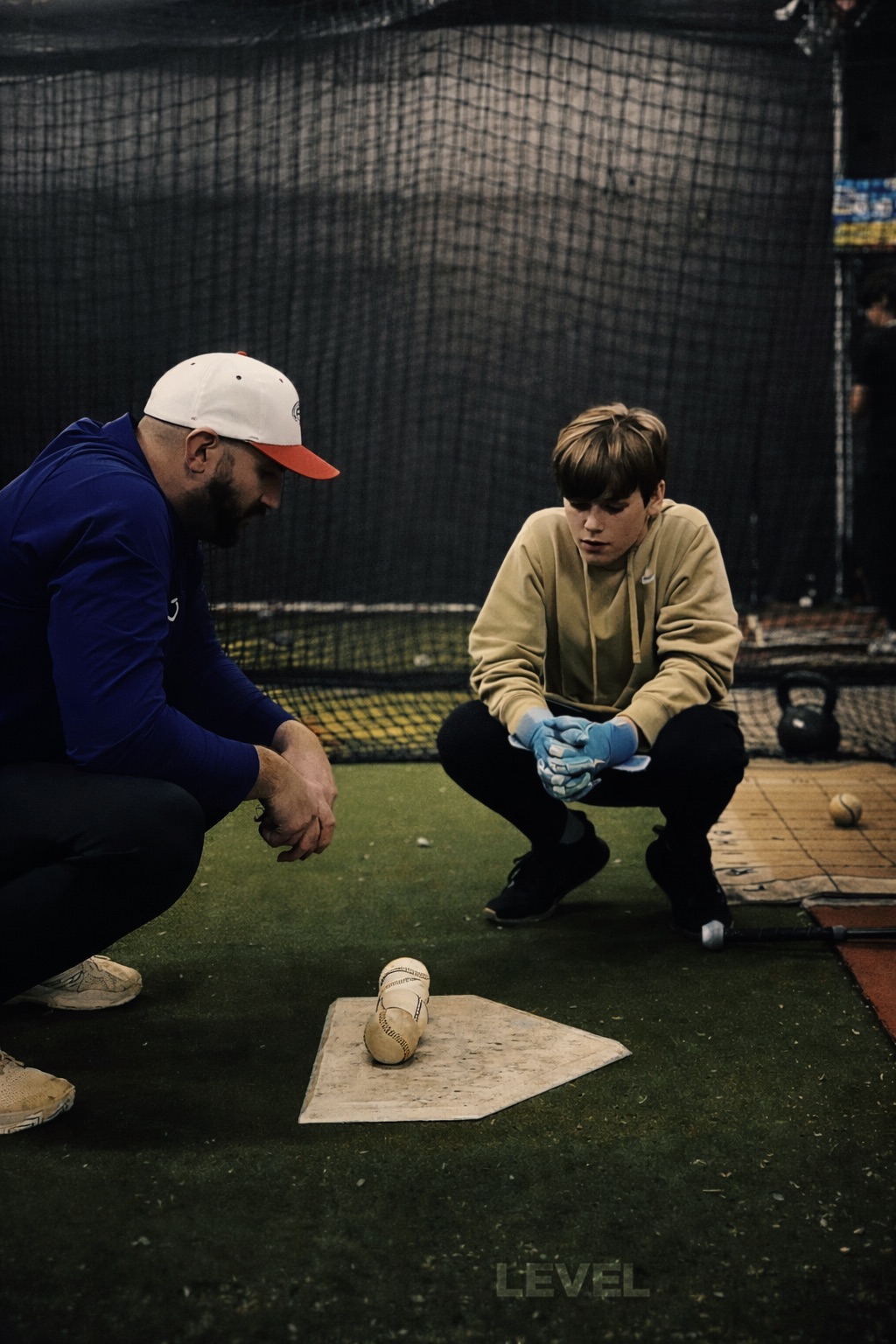
Step 01: SEE THE HITTER
Bat speed, exit velocity, contact quality, pitch recognition, swing decisions, and how the player moves.
ResultA clear picture of what is already working.
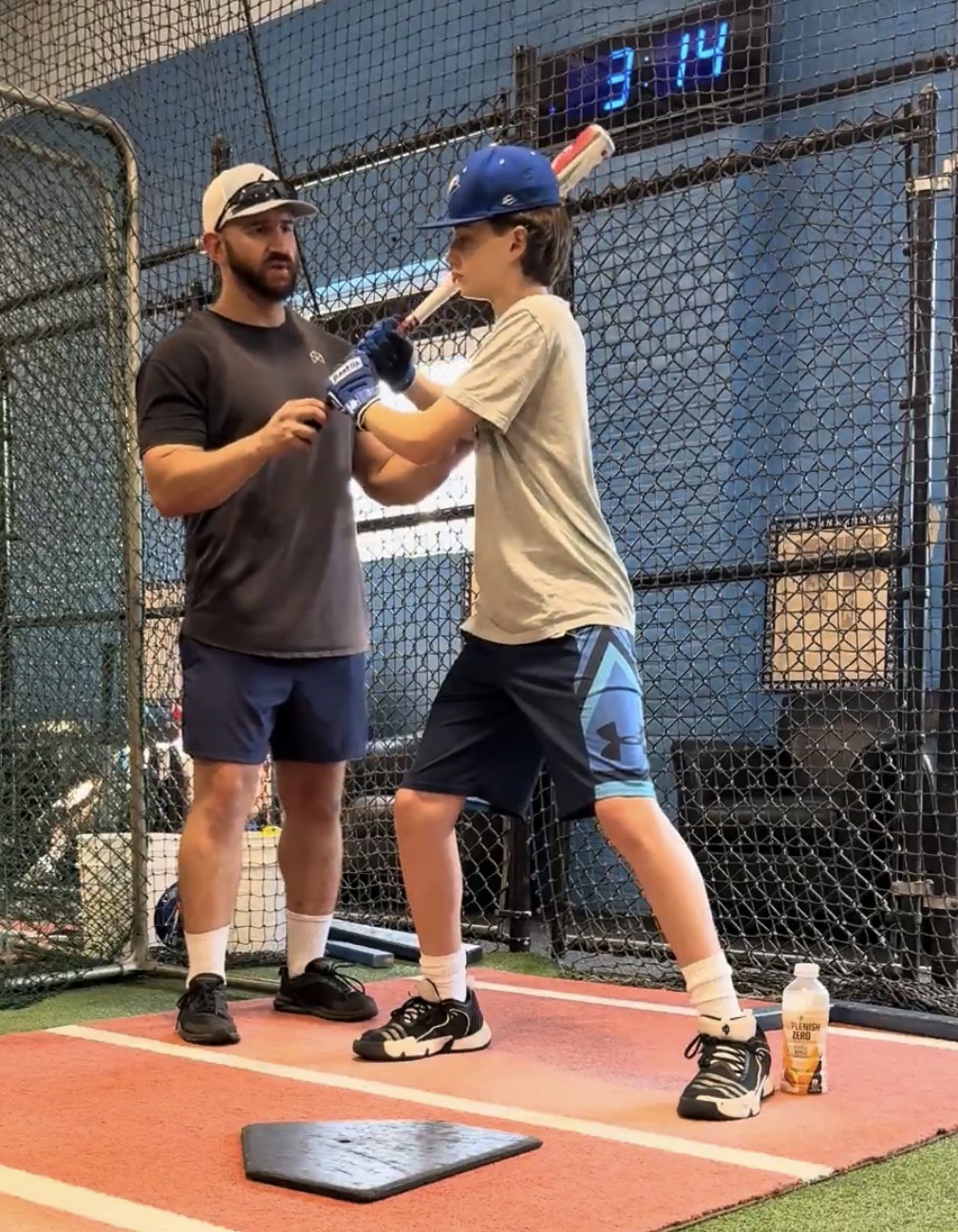
Step 02: FIND WHAT HELPS MOST
Isolate the one thing getting in the way instead of changing everything at once.
ResultA highest-priority need, named and explained.
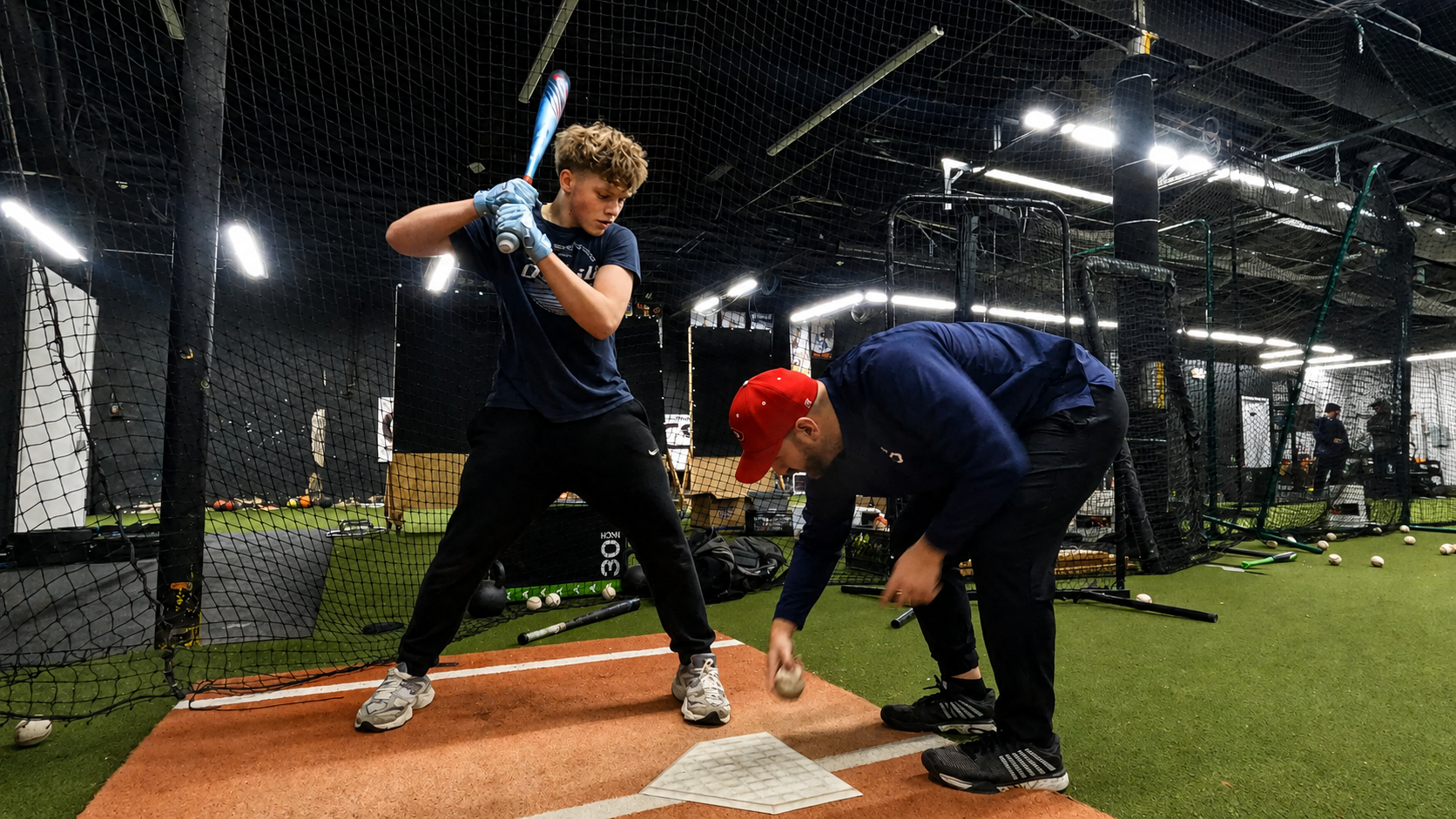
Step 03: BUILD THE PLAN
Drills, cues, and at-bat approach chosen for that specific hitter.
ResultA direction you can see showing up in games.
REAL DEVELOPMENT. REAL AT-BATS.
SELECTED PLAYER RESULTS
A few examples of where hitters started, what changed, and how the work began showing up in games.
NIALL REILLY
DROVE A DOUBLE INTO THE GAP AFTER 114 DAYS
WHERE HE STARTED
Struggled with balance, timing, and getting the barrel to the ball.
WHAT CHANGED
Built a more controlled move, cleaner path, and repeatable swing.
EMMET REILLY
WENT 5-FOR-6 BY HIS THIRD GAME
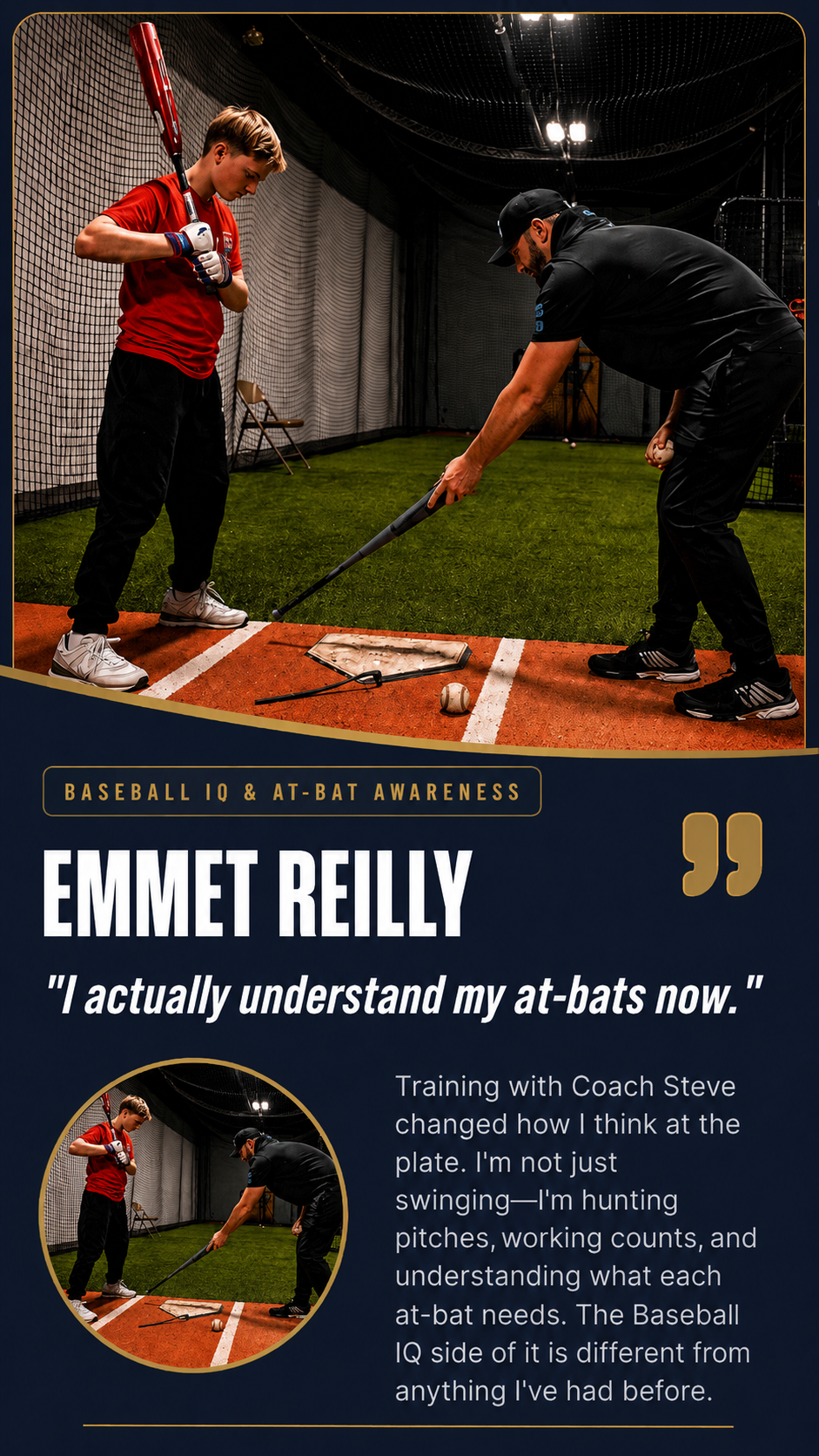
WHERE HE STARTED
Four hits in 43 plate appearances the previous fall.
WHAT CHANGED
Better mechanics, timing, approach, and at-bat awareness.
SEAN JAEGER
WENT 2-FOR-3 WITH TWO TRIPLES
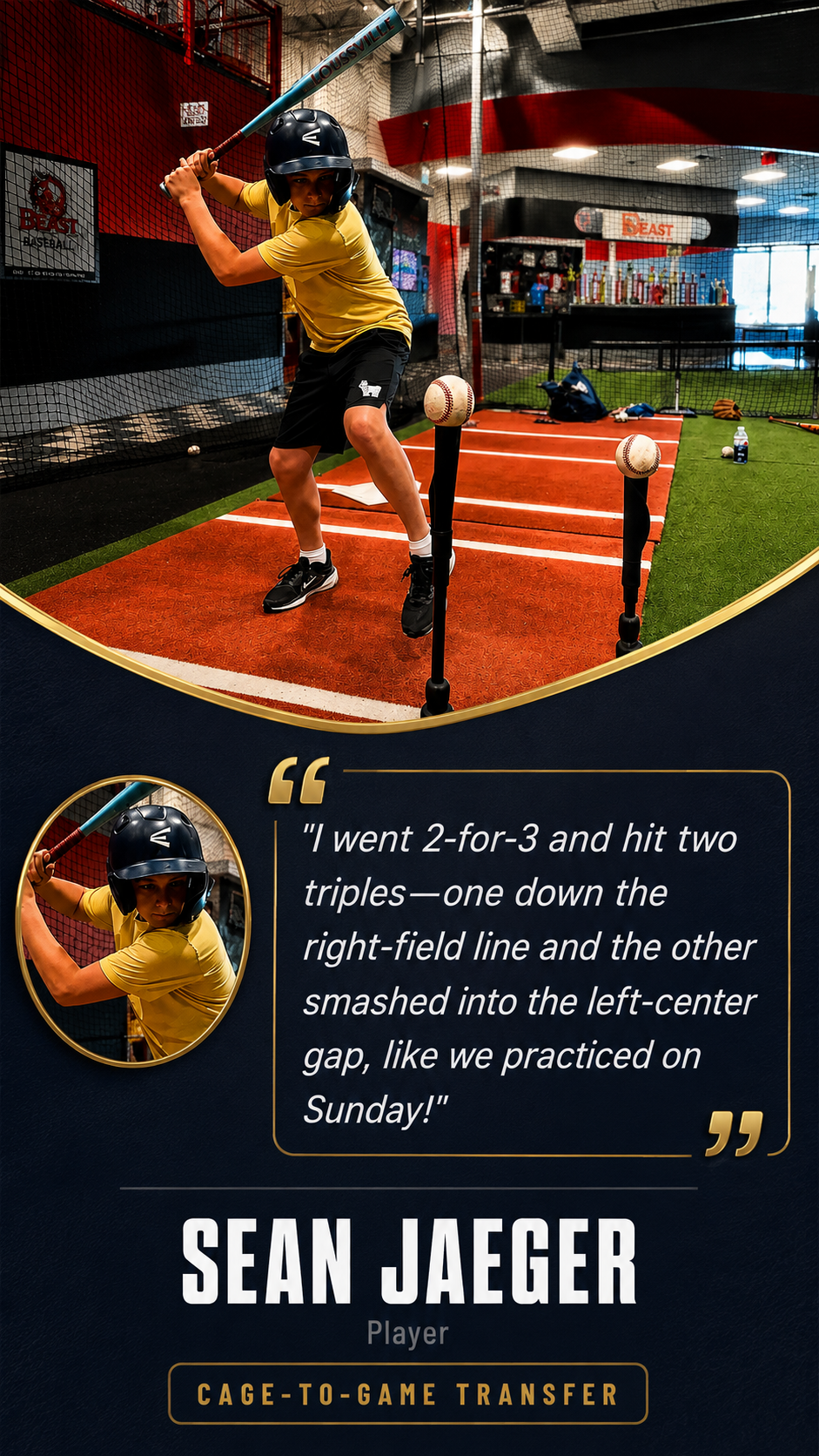
WHERE HE STARTED
Needed the cage work to become more usable in real at-bats.
WHAT CHANGED
Clearer decisions and a more confident plan.
Swipe for more results →
1 / 3
In their words
MORE THAN A BETTER SWING
Players and parents share what changed—clearer at-bats, better decisions, more confidence, and training that carries into games.
Swipe to see the proof →
1 / 6
THE WORK BEHIND THE TRAINING
HITTING IQ AND A REAL DRILL LIBRARY
Hitting IQ · Tap a count
THE DECISION HAPPENS FIRST
- Pitch flight
- 400ms
- Time to decide
- 175ms
A 95 mph fastball reaches the plate in roughly 400 milliseconds. The hitter has about 175 of those to decide. That is why swing decisions and zone discipline are trained, not hoped for.
Pitcher's view · Count 0-0
taketaketaketakedriveprotecttakeprotecttake
Count 0-0. 1 drive zones, 2 protect zones, 6 take zones.
drive protect take
Neutral count. Sit on one zone — usually middle-middle or middle-in — and only fire if it's there. Everything else: take.
Drill Library
EVERY DRILL HAS A PURPOSE
118purpose-built drills
Each drill is tied to a specific flaw, movement, or decision-making need — so training time goes toward the thing your hitter actually needs.

Barrel pathTWO-TEE PATH WORKTrains the barrel to stay on plane through the hitting zone instead of cutting across the ball. 
Move qualityLOAD & SEPARATIONBuilds a load the hitter can repeat, so the swing starts from the same place every time. 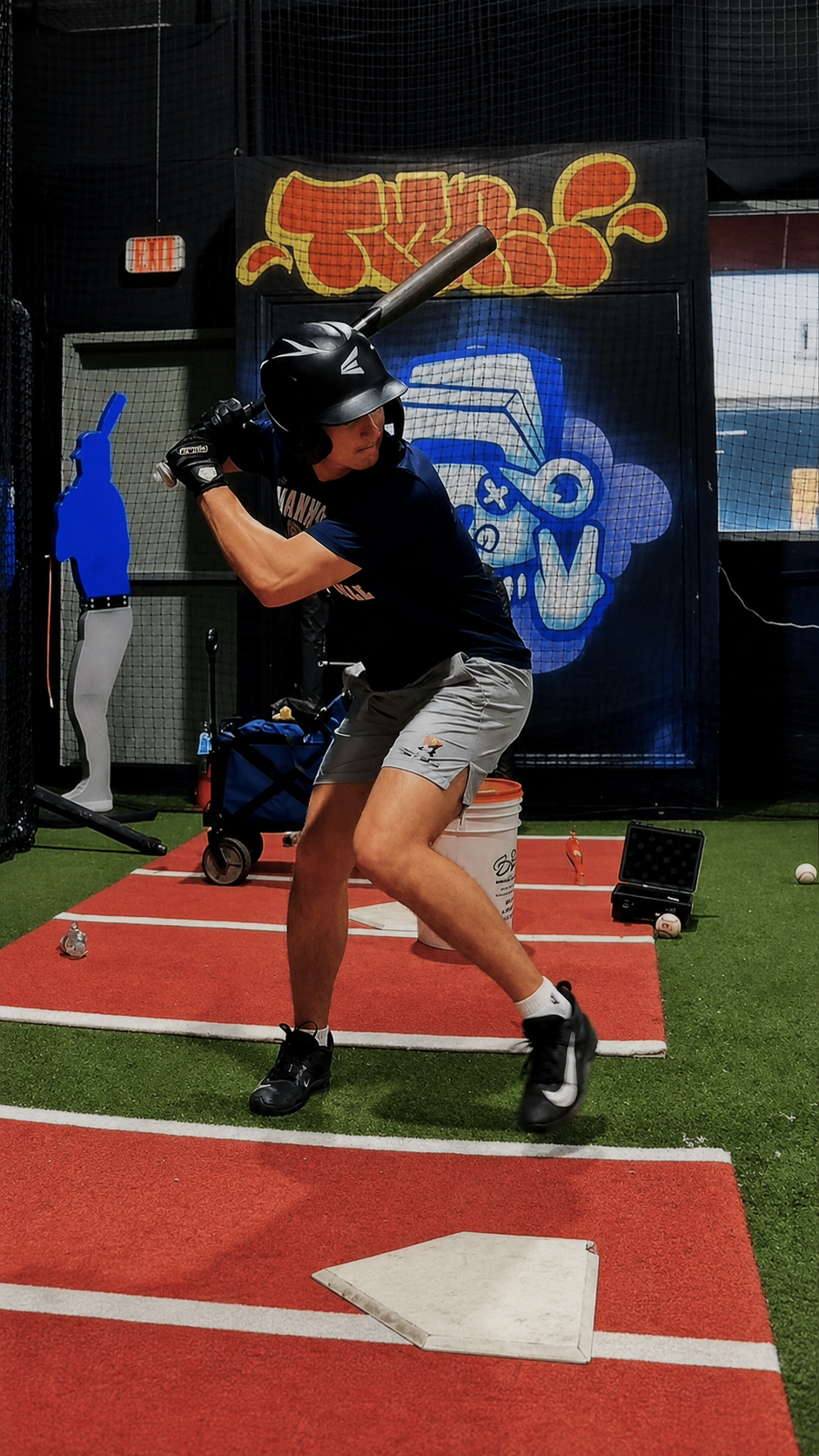
TimingLAUNCH POSITIONGets the hitter on time and in a strong position to launch, so decisions can be made later.
Swipe through the drills →
1 / 3
Every library entry includes the drill and video, what it fixes, why it matters, and Coach Steve's cue.

THE EXPERIENCE BEHIND THE COACHING
I COMPETED WHERE PREPARATION, APPROACH, AND ADJUSTMENTS MATTERED
D1 All-American · 2012 College World Series · Big 12 · Cape Cod League
Playing at that level showed me how quickly the game exposes hitters who rely only on mechanics. Preparation, pitch recognition, approach, confidence, and the ability to adjust are what allow the swing to hold up.
Competed with and against Aaron Judge, Kyle Schwarber, Alex Bregman, Aaron Nola, Jeff McNeil, and more.
Read Coach Steve's Story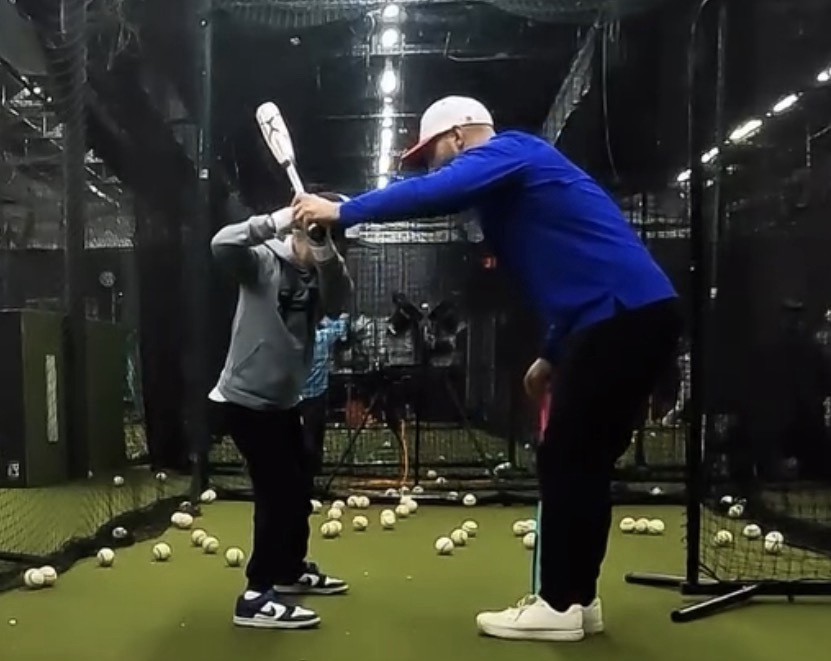
Start here
LET'S SEE WHAT WILL HELP YOUR HITTER MOST
The first session shows where your hitter is now, what he or she already does well, and what can make the biggest difference. You leave with a clearer understanding and a direction for what comes next.
Private hitting instruction at selected locations across Long Island. Current options and availability are shared when you inquire.